How to Hold Your Breath Longer: 3 Tips from Florian Dagoury, the Man Who Held His Breath for 10 Minutes
Florian Dagoury held his breath for over 24 minutes in a yoga-assisted static apnea, making him one of the most remarkable breath-hold practitioners alive. In this Molchanovs Freediving video, he breaks down three fundamental principles that transformed his practice — applicable to freedivers at every level.
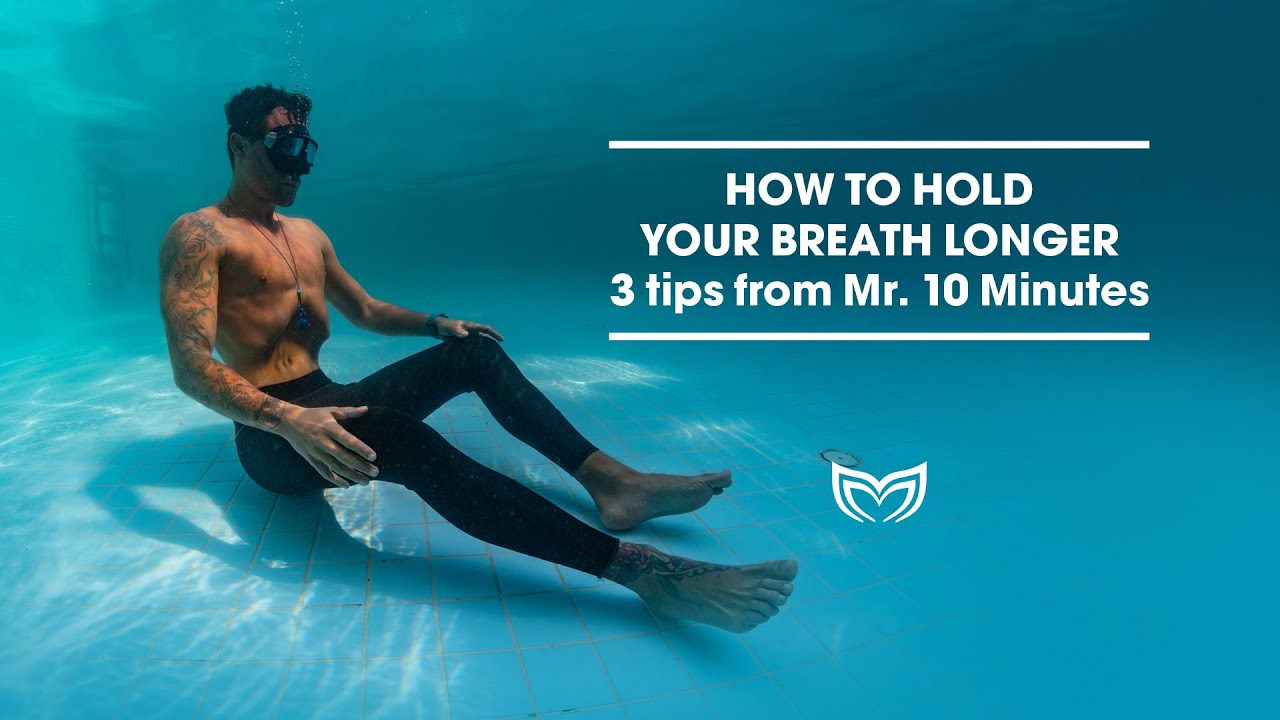
Florian Dagoury is not a conventional competitive freediver. He is a yoga practitioner, meditation teacher, and breath-hold specialist who achieved a Guinness World Record for the longest static apnea in a yoga position — a performance that brought together Eastern body awareness and Western scientific understanding of breath-hold physiology in a way rarely seen in the sport.
In this video produced by Molchanovs Freediving, one of the world's leading freediving education brands, Dagoury shares three core principles from his training that he believes are underutilised by most recreational and intermediate freedivers. The insights are grounded in both yogic philosophy and applied physiology, which is what makes them genuinely useful rather than merely motivational.
Why This Video Matters for Freedivers
Most freediving education correctly focuses on the physiological side of breath-hold: CO₂ tolerance, mammalian dive reflex optimisation, relaxation, and technique. What is less often addressed is the role of mental state and body awareness during the hold — how much the quality of attention directed inward affects the duration and comfort of a breath-hold.
Dagoury's approach draws directly on yoga nidra (yogic sleep) and pranayama to teach the nervous system to tolerate extended breath-hold not through willpower and suppression of discomfort, but through genuine relaxation and the ability to witness rather than react to internal sensations. This is a skill that can be trained independently of water and carries directly into freediving performance.
Key Concepts Covered
- Relaxation as an active skill: True relaxation is not passive — it requires practice. Dagoury explains why most people confuse stillness with relaxation and how to develop the genuine physiological downshift (reduced heart rate, reduced oxygen consumption) that makes long breath-holds possible.
- Working with contractions: The diaphragm contractions that occur during a breath-hold are the body's CO₂-driven signal to breathe. Most freedivers experience them as uncomfortable and fight them. Dagoury reframes contractions as a normal, manageable phenomenon and teaches techniques for remaining relaxed through them.
- Breath awareness before the hold: What you do in the final 2–3 minutes before your breath-hold — the quality and pattern of your breathing — significantly affects the performance of the hold itself. Dagoury describes his specific breathe-up practice and why a slower, fuller exhale is often more important than the quality of the inhale.
Who Should Watch This
This video is suitable for freedivers at all levels, but it is particularly valuable for intermediate practitioners who have mastered the basics of equalisation and relaxation but feel they have plateaued. If your breath-hold times have stalled despite consistent pool training, the principles Dagoury outlines often point to the missing variable: the quality of mental engagement during the hold, not the quantity of physical training.
Dagoury's background in yoga means his cues are precise and body-centred — he is describing real physical sensations, not abstract metaphors. For Western-trained athletes unfamiliar with breath-oriented practices, this video often opens a completely new dimension of what is possible in breath-hold training.
댓글
댓글을 불러오는 중...